
AlphaGo became a turning point not only because it defeated a human, but because it made the true engineering scale behind such a result impossible to ignore.
The chapter shows that the breakthrough depended not only on neural networks, but on the combination of search, training data, self-play, and serious compute discipline.
For architecture discussions, it is a strong case for asking where a headline result ends and where the questions of cost, transferability, and repeatability begin.
Practical value of this chapter
Hybrid system
The film helps explain AlphaGo as the result of several layers working together rather than one magical model.
Data from self-play
It is a strong case for discussing how a system can keep generating training data once human examples are no longer enough.
Cost of breakthrough
The material makes the compute budget, infrastructure discipline, and organizational effort behind the headline result visible.
Interview material
It is a strong example for discussing research breakthroughs, compute limits, and the transferability of a solution.
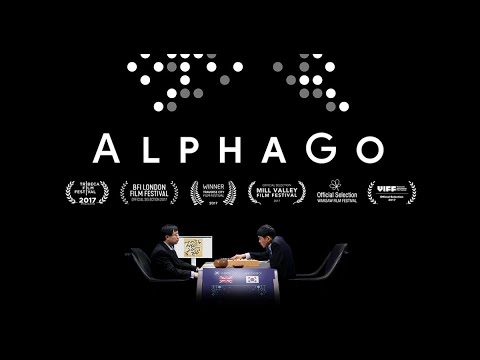
AlphaGo: The Documentary
Documentary about the AlphaGo vs. Lee Sedol match and the engineering system that made the breakthrough possible
Source
Book cube
Original post recommending the film with brief context
What the film is about
The human-versus-machine match is the surface. Underneath it the film holds something else: the engineering system behind the result, and a team making decisions under pressure and working with uncertainty when the cost of a mistake is public.
This is not about “replacing humans.” The film shows how search, neural networks, data, and compute discipline expand the strategy space in a task where brute-force enumeration is out of reach.
Self-play matters especially here: it shows how a system mines its own training material once the supply of human game records is exhausted and there is no one left to copy.
Expanded history: key milestones
DeepMind is founded
The team sets a long-term goal: learning systems that hold up where a task cannot be reduced to a fixed set of hand-written rules.
Integration with Google
Joining Google provides access to large-scale infrastructure and speeds up the path from hypothesis to experiment.
AlphaGo defeats Fan Hui
The first public signal that combining neural networks with tree search can beat professional Go players.
Match vs Lee Sedol (4:1)
The Seoul series carries a research milestone out of the lab and into public view — and with it the debate about the future of intelligent systems.
AlphaGo documentary release
The film captures both the engineering and human dimensions of the project: uncertainty, pressure, and teamwork under global attention.
AlphaGo Zero and self-play beyond human games
The system learns without human game records and discovers even stronger strategies.
Legacy in new domains
AlphaGo methods evolve into projects such as AlphaFold, where these systems become tools for scientific discovery and optimization.
Key people in the story
What this changes in system design
Hybrid architecture: networks plus search
The strength comes from composition, not a single component: policy/value networks prune the clearly weak moves, while Monte Carlo Tree Search reads the rest in depth. On its own, each layer loses.
Self-play as a source of data
Real games are scarce and biased toward human style. Self-play removes both limits — training trajectories without manual labels — but in return it costs compute and risks baking in the system's own mistakes.
Experimentation as an engineering discipline
Without disciplined hypotheses, validation, monitoring, and reproducible runs, a strong result cannot be told apart from a lucky one — and cannot be repeated.
Humans remain in the loop
High model autonomy does not remove the human: a discovered strategy is worth nothing until someone reads it, checks it, and carries it into practice.
What happened after the film
After the events shown in the film, the approach was extended in AlphaGo Zero and AlphaZero, then moved into a new class of projects including AlphaFold. That is where the real signal shows: a single match stayed an episode, while the method kept working on other tasks.
References and materials
- AlphaGo (YouTube)
- Mastering the game of Go with deep neural networks and tree search (Nature, 2016)
- Mastering the game of Go without human knowledge (Nature, 2017)
- The Thinking Game: The Documentary — continues the DeepMind story beyond AlphaGo and into later major scientific milestones.
Related chapters
- The Thinking Game: The Documentary - shows how DeepMind's trajectory continues after AlphaGo, from new research bets to AlphaFold.
- AI Engineering - translates research ideas from the film into engineering practices around quality, releases, and operating systems built around models.
- ML System Design - adds a practical view of data, metrics, and the lifecycle of ML systems.
- PyTorch: Powering the AI Revolution - adds the ecosystem and infrastructure context behind modern deep learning.