
The Thinking Game matters not as another success story about DeepMind, but as a rare documentary record of a long research bet.
The chapter helps show how breakthroughs such as AlphaGo and AlphaFold grow out of experimental culture, infrastructure, and organizational patience rather than one lucky move.
For architecture conversations, it is a strong case for discussing the cost of research, the transfer of methods across domains, and how a platform slowly emerges from a lab ambition.
Practical value of this chapter
Long horizon
The chapter helps you discuss AI as a long research bet rather than a sequence of isolated wins.
Research organization
The film is useful for explaining how team culture and compute infrastructure shape the pace and quality of breakthroughs.
From games to science
The material shows how research patterns move from game environments into domains with measurable impact.
Interview material
It is a useful case for discussing long-horizon research, organizational trade-offs, and the influence of infrastructure on AI outcomes.
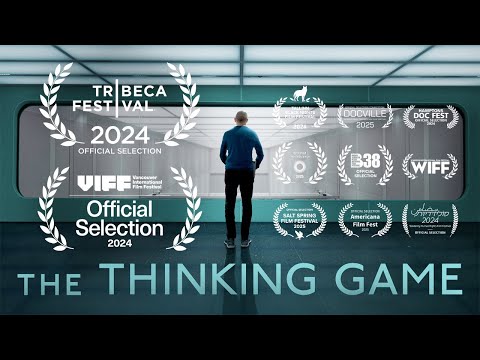
The Thinking Game: Documentary
A five-year chronicle of DeepMind: from AlphaGo to scientific breakthroughs and the wider conversation about AGI
Source
Book cube
Film review by Alexander Polomodov
What the film is about
"The Thinking Game" presents DeepMind not as a set of headlines, but as a long research process: hypotheses, failures, architecture pivots, and gradual movement from game benchmarks to science and practical systems.
The title echoes "The Imitation Game" about Alan Turing, but this film is fully documentary: real team members, real working discussions, and real engineering constraints on the road to AGI.
One recurring motif in the film is self-play: the idea that a system can keep generating stronger training scenarios without relying on a fixed archive of human games.
Expanded history: key milestones
From chess and game development to the study of intelligence
The film ties Demis Hassabis's early interests in chess, game engines, and research thinking to DeepMind's later strategy: build systems that learn to solve hard problems rather than follow rigid hand-written rules.
DeepMind is founded
Demis Hassabis, Shane Legg, and Mustafa Suleyman launch the company with a long-horizon goal: move from narrow AI systems toward more general intelligence.
Acquisition by Google
The deal provides access to infrastructure and compute resources at Google scale. The documentary presents it as the moment when research can start moving much faster.
AlphaGo vs Lee Sedol
AlphaGo's win becomes a global signal that deep learning plus reinforcement learning can outperform humans in strategic domains.
AlphaGo Zero and stronger self-play
Training without human game records reinforces a central DeepMind idea: systems can discover strategies beyond expert-designed patterns.
AlphaFold2 breakthrough in biology
The work moves beyond games: protein structure prediction, long considered an extremely hard problem, reaches practical breakthrough quality.
Google DeepMind is formed
The merger of DeepMind and Google Brain signals a shift from separate research groups toward a more unified research and development platform.
The Thinking Game festival premiere
The documentary is screened at festivals (including Tribeca official selection) and captures the internal dynamics of an AGI-focused lab.
Public release and the next wave of projects
After the festival cycle, the film reaches a wider audience on YouTube while the lab's trajectory continues through newer projects such as AlphaEvolve.
Key people in the story
What this changes in architecture discussions
Long horizon, staged wins
AGI as a goal cannot be verified directly, so the film breaks it into intermediate milestones: games, science, practical tools. Each milestone gives a measurable signal of progress and keeps the team from moving blind for years.
Infrastructure sets the pace of research
The bottleneck is not ideas but compute, data, and the maturity of internal tools. A weak stack means a breakthrough is hard to reproduce and reaches practice only after a long delay.
From research to practical impact
A demo on Go is worth little until the method transfers to where the result is measured in money or in scientists' time. That is exactly why DeepMind pulls its approaches from games into biology and optimization.
Governance and trust
As model autonomy grows, so does the cost of an opaque decision. Safety, accountability, and the conversation with society stop being an add-on and become part of the architecture itself.
What happened after the film
Filming ends before the wide YouTube release, so part of what follows stays outside the frame. In 2025 the team published new outcomes, including AlphaEvolve: the story did not stop at AlphaGo and AlphaFold and keeps unfolding across both engineering and scientific directions.
References and materials
- The Thinking Game (YouTube)
- Google DeepMind
- Nobel Prize in Chemistry 2024 - summary
- AlphaGo: The Documentary - the prologue to this story and the public starting point of DeepMind's journey.
Related chapters
- AlphaGo: The Documentary - shows the prehistory of DeepMind's breakthrough and the context where this story begins.
- AI Engineering - translates the research-lab narrative into engineering practices for systems built around large models.
- ML System Design - adds a practical view of ML system design, metrics, and data loops.
- PyTorch: Powering the AI Revolution - adds a parallel story of how framework and community dynamics accelerated modern machine learning.
- Hands-On Large Language Models - connects the film's AGI discussions with hands-on modern language models, retrieval, and agent workflows.