
Angular is interesting because from the start it chose the path of a full platform rather than a minimal library. The story makes it clear how framework choices become coupled with the CLI, project structure, dependency injection, and the working model of large teams.
The practical value of the chapter is that it presents Angular not just as a technology, but as a bet on standardization. It is useful for understanding when one shared set of rules, migration tools, and built-in practices genuinely helps frontend systems grow in a predictable way.
In architecture reviews and engineering discussions, this case works well when the topic is the trade-off between flexibility and control. Angular is a strong vehicle for discussing the cost of large migrations, the leverage of strict platform conventions, and the situations where structure beats free choice.
Practical value of this chapter
Design in practice
Turn the Angular story into decisions about platform conventions, dependency injection, build workflows, migrations, and shared team standards.
Decision quality
Evaluate Angular architecture through upgrade predictability, contract quality, client-code cost, and manageability across large teams.
Interview articulation
Structure answers as interface complexity, platform choice, types, compilation, migration path, and operating discipline.
Trade-off framing
Make the cost of Angular standardization explicit: less local freedom, but more repeatability, automation, and long-term control.
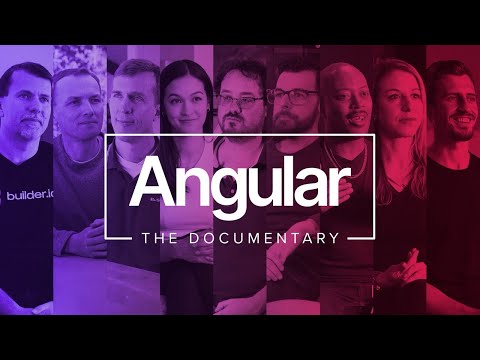
Angular: The Documentary
Angular as an engineering platform story: from a Google experiment to a long-lived framework for large product teams.
Source
Book cube
Original post recommending the documentary
What is the film about?
The documentary presents Angular as a story of engineering trade-offs: from a local experiment inside Google to a large platform that long-lived enterprise products are built on. The interesting part is not the framework itself, but the moment a technical choice stops being one team's decision and turns into an organizational standard — with its own cost and inertia.
The film does not skip the painful side of growth. Large teams distrusted the new version, the AngularJS to Angular 2+ migration turned out expensive, and tooling had to be built not for project bootstrap but for years of evolution — and this is exactly where the platform approach diverges from an ordinary library.
Architecturally, Angular is a story about the Angular platform, component-driven UI, dependency injection, declarative templates, two-way data binding, TypeScript, AoT compilation, Ivy, Angular CLI, server rendering, hydration, Signals, and managed migrations.
Angular Platform Architecture Map
Angular is best understood as a connected platform contour: framework, language, build tools, migration mechanics, and team rules work together instead of behaving like a random library stack.
From component model to repeatable delivery
Angular defines not only how components are written, but also shared decisions for routing, forms, dependency injection, and build workflows.
UI unit
Component
The screen is split into managed parts with explicit inputs, outputs, and lifecycle behavior.
Markup
Declarative template
Templates connect data, events, and UI states without hand-building DOM operations.
Wiring
Dependency injection
Services, API clients, and infrastructure logic are attached through an explicit dependency container.
Product flow
Routes and forms
Navigation, validation, and input state use one shared model instead of scattered local choices.
Delivery
CLI and build
Teams get repeatable paths for generation, build, testing, and project updates.
Architecture meaning
When to use this lens
- You need to explain why Angular is chosen as a platform, not only as a UI library.
- The team wants less variance across routes, forms, services, and build setup.
- Predictability matters across multiple teams and a long-lived product.
Why Angular became an important industry signal
From framework to delivery platform
Angular covers not only the view layer but the whole path from code to release: conventions, tooling, and managed evolution. The price is less freedom in the details; the payoff is that dozens of engineers hold one style without constantly re-arguing how the project is built.
Radical change as a managed process
The break between AngularJS and Angular 2+ was abrupt, and some teams never left the old version. The lesson is elsewhere: you can survive a break like this, but only if the migration path is planned as a separate program rather than a one-off refactor squeezed between tasks.
Key technical ideas
A coherent platform, not only a view layer
Routing, forms, dependency injection, build, and large-team conventions arrive together as the Angular platform. The price is less freedom in individual choices; in return a team does not assemble a stack from a dozen independent libraries and re-argue it on every project.
Type safety and static analysis as strategy
The TypeScript partnership turned out strategic, not cosmetic. In large codebases types catch contract mismatches before runtime, and changing an interface gets safer once dozens of modules depend on it.
Compilation as an architectural mechanism
AoT and Ivy show how part of runtime cost can move into a controlled build workflow without sacrificing product capability.
Migrations as platform capability
Angular CLI, schematics, and official guides turn an upgrade from a manual one-off into a repeatable process — so the cost of moving between versions stops growing with the size of the codebase.
Related chapter
TypeScript Origins: The Documentary
Context for why TypeScript became strategically important for Angular evolution
Key milestones
GetAngular and the birth of AngularJS
The framework starts as a local initiative inside Google: Misko Hevery's prototype radically simplifies legacy code in Google Feedback.
AngularJS becomes an open project
Declarative templates, dependency injection, and two-way data binding make AngularJS one of the most visible tools of its era.
AngularJS reaches its scaling limits
Enterprise application growth exposes pressure points in the old model: debugging complexity, performance constraints, and rising cost of long-term evolution.
AtScript, Dart, and the TypeScript decision
The team looks for a language and tooling path for stricter architecture. Angular and TypeScript eventually align around typing, static analysis, and long-term support.
Angular 2+: an architectural reset
The new version changes the foundation: component model, RxJS, AoT compilation, and a different lifecycle. Migration from AngularJS becomes an engineering program of its own.
Ivy becomes the default
The Ivy rendering engine reduces bundle size and improves tree-shaking while preserving compatibility for existing products.
Signals, server rendering, and renewed maturity
Angular strengthens reactivity, server rendering, and developer experience, lowering the maintenance cost of large long-lived frontends.
How the ecosystem evolved
CLI and delivery standardization
Angular CLI makes build setup, environments, and code generation repeatable, which matters especially for monorepos and multi-team products.
LTS thinking and predictable upgrades
Over time Angular settled into a release rhythm where migration manageability matters as much as new features: for a product that lives for years, a predictable upgrade is worth more than any single feature.
Signals and modern reactivity
Reactive signals make the path from data changes to the screen more explicit and reduce accidental complexity in product development.
Server rendering and hydration as a standard scenario
A stronger server-rendering path, hydration, and Web Vitals focus make Angular more viable where SEO, first-screen speed, and reliable UI delivery matter.
People highlighted in the film
What matters for system design
Platform evolution beats local optimization
In large systems a single good feature is worth little if you cannot carry it safely through years of upgrades. Predictable version lifecycles and long-term compatibility win.
Conventions reduce architectural entropy
The more teams work on a product, the more divergence in code structure costs. A stricter platform sets shared rules and keeps dozens of engineers in one lane without a separate agreement for every module.
Types and contracts are scale-critical
A stronger API and data model reduces integration defects and makes refactoring safer in complex UI domains.
Migrations should be designed as programs
Major-version transitions need migration playbooks, automation, test coverage, and explicit risk metrics.
How to apply Angular ideas today
Common pitfalls
Recommendations
References
Related chapters
- TypeScript Origins: The Documentary - shows how TypeScript evolution and design choices became a foundation for Angular's modern architecture.
- C# & TypeScript - History of languages with Anders Hejlsberg - adds language-design context around C# and TypeScript principles that directly shaped the Angular ecosystem.
- React.js: The Documentary - contrasts framework philosophies: React's minimal core versus Angular's more standardized platform model.
- Ember.js: The Documentary - helps compare two platform-oriented approaches where conventions, managed migrations, and long-term support are central.
- Frontend Architecture for Design Systems (short summary) - turns the film's lessons into practice: process, testing, architecture standards, and team scalability.