
The Anders Hejlsberg story shows a rare engineering through-line: first give developers fast, useful feedback, and only then make the language more sophisticated. In that sense, both C# and TypeScript look less like feature sets and more like carefully staged evolution of the developer environment.
The material is especially good at showing how choices about type systems, compatibility, and tooling turn into everyday team productivity. It explains why a strong language wins not only through expressiveness, but through how safely it lets people change a living codebase.
This case is especially valuable when the topic is language evolution without ecosystem damage: how to add power without breaking users, and why IDE support, types, and backward compatibility often matter more than elegant theory.
Practical value of this chapter
Design in practice
Connect C# and TypeScript to verifiable contracts, IDE setup, analyzers, CI, and migration planning.
Decision quality
Evaluate the language through feedback speed, backward compatibility, upgrade clarity, and lower change risk.
Interview articulation
Structure answers as type system, IDE diagnostics, refactoring, quality checks, release, and maintenance.
Trade-off framing
Make the cost of strict rules explicit: more discipline and setup, but fewer hidden integration errors.
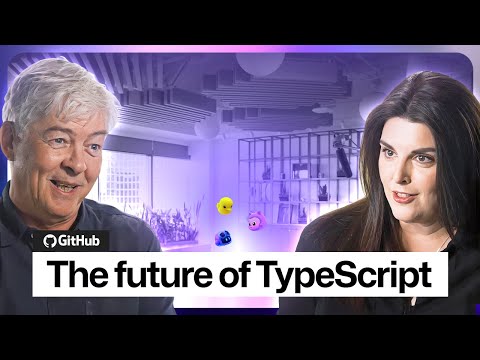
C# & TypeScript - History of languages with Anders Hejlsberg
An interview on how language design, tools, and compatibility shape long-lived engineering platforms
Source
C# & TypeScript - History of languages with Anders Hejlsberg
GitHub interview with Anders Hejlsberg on language design, evolution, and engineering trade-offs.
What is the interview about?
Anders Hejlsberg designed both C# and TypeScript, and in the interview the two stories converge on one question: how do you keep a language manageable once hundreds of developers, millions of lines of code, and a product that cannot pause for a rewrite grow up around it?
The conversation stays on pragmatics rather than syntax aesthetics. What matters is feedback speed, compatibility with code that already exists, and evolution without disruptive breakage — because every break is paid for in the time of the teams who maintain that code.
This chapter reads the interview through type systems, static typing, gradual typing, TypeScript's structural model, IDE diagnostics, backward compatibility, managed migration, developer tooling, and the engineering feedback loop.
C# and TypeScript Architecture Map
The interview is useful as a map of engineering feedback: language design, types, IDE support, and CI checks together determine how safely teams can change a large codebase.
The language shortens the path from defect to fix
Type systems, IDE diagnostics, and CI checks give engineers an early signal before defects reach integration or production.
Source
Code expresses intent
Engineers encode domain models, APIs, and constraints directly in code, not only in documentation.
Check
Type system catches mismatches
Types reveal wrong calls, missing fields, and incompatible contracts before execution.
Diagnostics
IDE shows issues next to the code
Hints, navigation, and quick fixes reduce the distance between a defect and an action.
Change
Refactoring becomes controllable
When dependencies are visible to tools, teams can rename and reshape interfaces with less fear.
Confidence
CI turns local feedback into a team signal
Quality checks make individual confidence part of the shared release contract.
Architecture meaning
When to use this lens
- The team is debating why types matter to architecture, not only to editors.
- Change cost is growing faster than product size.
- You need to connect language design, IDE support, and release quality.
Why this matters
Languages influence architecture velocity
When an edit in a large system breaks something far from the change, delivery slows down. Language tooling decides how early a team sees that risk — before the commit or already in production.
Trade-offs define technology longevity
A language that breaks old code for the sake of a clean design loses the teams who cannot afford to migrate. The ones that last choose predictable evolution, even when that means living with a compromise.
Key technical ideas
Feedback speed as an architectural variable
Type checking, the compiler, and IDE hints shorten the defect loop and directly influence team throughput.
Evolution beats full rewrites
C# and TypeScript show that compatibility, migration paths, and staged adoption keep long-lived systems sustainable.
Language and tools are inseparable
Practical language value comes from language services, IDE diagnostics, navigation, refactoring, and CI checks.
Pragmatism over ideological purity
A perfectly clean design loses if it ignores legacy code, team habits, and delivery cadence. Hejlsberg repeatedly picks what will take root over what looks nicer on paper.
Key milestones
Turbo Pascal and early language design
Anders Hejlsberg gains experience building practical languages where compilation speed and IDE workflow become part of the product.
Public C# announcement
Microsoft introduces C# as a language for the long-lived .NET platform, where compatibility, tooling, and careful evolution matter.
C# ships with .NET 1.0
The language builds a culture around static typing, IDE support, and a platform approach to enterprise development.
TypeScript is announced
A practical path appears for adding a type system to JavaScript without abandoning the existing ecosystem.
TypeScript 1.0
The stable release confirms the evolutionary strategy: gradual typing and JavaScript compatibility.
.NET Core 1.0 and cross-platform growth
C# and the .NET ecosystem become more open and broaden their platform reach across infrastructure environments.
C# 9 and modern language ergonomics
Language evolution makes functional and declarative patterns more accessible for mainstream enterprise systems.
TypeScript 5.x and mature tooling
The TypeScript ecosystem consolidates its role as a foundation for large product platforms and rapid iteration.
Interview as engineering retrospective
The conversation with Anders Hejlsberg ties C# and TypeScript into one line: language, tools, and safe evolution have to be designed together.
How C# and TypeScript evolved
Evolution through iterations
Both languages evolved in staged releases so teams could migrate without major delivery disruption.
Open process as prioritization signal
Public issues and PRs expose real user pain, helping roadmap decisions track practical needs.
Compatibility as a strategic asset
A large team upgrades a language more willingly when it knows its code will not break on the next version. Backward compatibility is not politeness — it is how you keep trust and lower ownership cost.
Tooling as part of the platform
Editors, compilers, analyzers, and CI form one engineering system, not optional add-ons.
People and roles in the story
What matters for system design
Contracts should be verifiable
Static typing, strict interfaces, and schemas reduce integration risk in systems that span many teams and service boundaries.
Technology evolution needs a migration plan
Architecture changes need staged rollout, backward compatibility, and a rollback path, not an instant switch for every team.
Developer experience affects reliability
The earlier teams see a problem, the cheaper the fix and the more stable the production behavior. That makes developer experience an architectural factor.
Language evolution affects project risk
When it is unclear where a language is heading and by what rules it changes, a platform system is hard to plan years ahead. Open design goals and a predictable roadmap take part of that risk off the table.
How to apply these interview ideas today
Common pitfalls
Recommendations
References
The factual base for this chapter is the interview with Anders Hejlsberg, the official C#/.NET and TypeScript documentation, design goals, and project repositories. The conclusions about language evolution, compatibility, and organizational practice are editorial assessment built from those sources.
Related chapters
- TypeScript Origins: The Documentary - it expands the standalone TypeScript storyline and provides deeper context for points only briefly covered in this interview.
- Node.js: The Documentary - it shows the server-side JS/TS ecosystem where language and tooling trade-offs affect high-load service architecture.
- IntelliJ IDEA: The Documentary - it complements the developer experience theme: languages scale faster when IDEs and tools improve feedback loops.
- Borland: Turbo Pascal, Delphi, and the History of an Engineering Empire - it reveals the early stage of Anders Hejlsberg's career and the historical roots of his language design approach.
- React.js: The Documentary - it provides the product frontend context where TypeScript and tooling practices became team-level standards.