
Node.js matters not only because of the event loop, but because it redrew the boundary between browser JavaScript, server-side services, and build tooling. Its story shows how one successful execution model, combined with npm, could reshape how web products are built and how teams organize around them.
The material connects the event loop, package ecosystem, and project governance to practical consequences: fast entry into full-stack JavaScript work, massive dependency reuse, and a new cost profile around software supply-chain failure. That makes Node.js useful for discussing not just performance, but the shape of the engineering ecosystem around a platform.
In architecture reviews, this case helps separate the real strengths of Node.js for I/O-bound systems from inflated expectations. It also gives strong context for discussing how a platform changes team structure, tools, and the overall development risk profile.
Practical value of this chapter
Design in practice
Connect Node.js to workload shape: network I/O, short request paths, timeouts, queues, and event-loop protection.
Decision quality
Evaluate the platform through event-loop lag, dependency maturity, LTS discipline, and clear operational signals.
Interview articulation
Structure answers as event loop, non-blocking I/O, CPU limits, npm, observability, and upgrade planning.
Trade-off framing
Make the cost of speed explicit: fast starts and a huge ecosystem require dependency control, profiling, and release discipline.
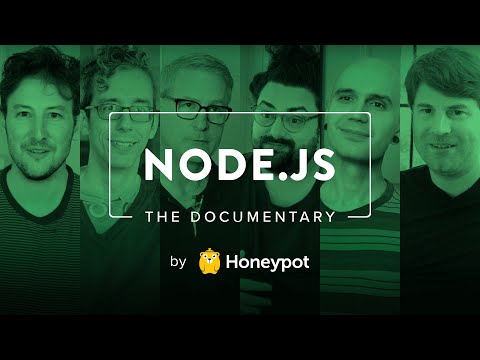
Node.js: The Documentary
The story of the platform that made JavaScript a language for server-side and realtime services
Source
Book cube
Documentary review from Alexander Polomodov
What is the film about?
Node.js started as one engineer’s experiment and became a platform that network-heavy server-side services now rely on. The film shows where the bet on the event loop and non-blocking I/O came from — and why “JavaScript beyond the browser” turned out to be a working tool rather than a curiosity.
But the technical bet is only half the story. The other half is the organizational cost of success: the rise of npm, the io.js fork crisis, the rebuild of project governance, and the move from a single author’s product to a standard the community is accountable for.
Architecturally, Node.js is best read as a runtime around the event loop, non-blocking I/O, libuv, and the V8 engine. The model pays off as long as a service mostly waits on the network, disk, or external APIs. The price you pay for it is discipline around synchronous paths, Worker Threads, and event-loop lag — one forgotten blocking call stalls the whole process.
The second half of the story is the ecosystem: npm, dependency trees, lockfiles, LTS lines, the io.js fork, and OpenJS Foundation. At this level Node.js is more interesting as a platform where delivery speed runs into dependency governance, release policy, and supply-chain risk: the faster the package tree grows, the more it costs to lose track of it.
Node.js Architecture Map
Node.js is best read as a platform around the event loop: it handles network waiting efficiently, but it needs discipline around blocking code, dependencies, and upgrades.
A request moves through one fast event-driven path
Node.js fits network services when the request path is short, avoids blocking the process, and quickly returns control to the event loop.
Entry
Client sends an HTTP request
The server process accepts the connection and turns it into an event for JavaScript code.
Server
The handler does minimal synchronous work
The less heavy computation in the handler, the more stable latency is for other requests.
Coordination
The event loop delegates waiting to libuv
Network work and some file operations move to the system layer or thread pool instead of occupying JavaScript.
Ready
A callback or promise resumes the flow
When the operation is ready, code assembles the result, records signals, and prepares the response.
Exit
The response returns without holding a thread
The model wins with many short network waits and disciplined error handling.
Architecture meaning
What to design
- A short synchronous section inside the request handler.
- Explicit timeouts, body limits, and cancellation for long work.
- Event-loop lag metrics next to normal service latency.
Why Node.js became an industry signal
Thread-per-request pain
In the late 2000s the classic thread-per-connection model hit a ceiling: every thread costs memory and context switches, and under thousands of slow connections the server spends its resources waiting instead of working.
Bet on an event-driven runtime
Node.js flipped the logic: instead of a thread per request, one event loop serving thousands of waiting connections. For APIs, WebSockets, and streaming that turned out cheaper on memory and simpler to operate.
Key technical ideas
An I/O-first execution model
Node.js is at its best for services that spend most of their time waiting on a response: throughput wins here, along with holding many connections at once without spending a thread on each.
Event loop as an architectural trade-off
A single event loop frees you from locks and races, but in return it demands disciplined handling of CPU-bound work: one heavy computation in the loop blocks every other client.
npm as a velocity multiplier
A ready-made package for almost any task speeds up delivery, but each one brings someone else’s code into your process — and raises the bar for supply-chain security and dependency quality.
One language across frontend and backend
When frontend and backend both speak JavaScript and TypeScript, the seam between teams disappears: less context switching, shared data models and validation — and the product reaches users faster.
Key milestones
First Node.js releases
Ryan Dahl publishes early Node.js releases and demonstrates how the event loop can be a practical foundation for network services.
npm appears
npm becomes the main ecosystem accelerator: the package manager makes module reuse much cheaper.
Production adoption grows
Node.js moves beyond experiment status and starts being used in web services with serious network load.
io.js fork
Disagreements around release pace and governance lead to a fork, which then reshapes project management practices.
Reunification and governance reset
Node.js and io.js reunify, establishing a more transparent governance model for long-term project stability.
OpenJS Foundation
Node.js joins OpenJS Foundation, reinforcing neutral governance and long-term ecosystem sustainability.
Node.js: The Documentary premieres
Honeypot captures the engineering history of Node.js: from first principles to a mature platform ecosystem.
Node.js 24 (Krypton)
v24 is released on May 6, 2025 and enters LTS on October 28, 2025 according to the official release schedule.
Node.js 18 (Hydrogen) reaches EOL
v18 reaches End-of-Life on April 30, 2025, highlighting why planned migration between LTS lines matters.
How the platform evolved
From one maintainer to global community
While the project rested on a single author, its pace and decisions hinged on one person. Moving to distributed ownership removed that fragility — but it required agreeing on the rules of who accepts changes and how.
Release lines and LTS discipline
A predictable release cadence and LTS give teams a calendar to plan upgrades against. Without it, migration turns into rushed work against an End-of-Life deadline.
Foundation-backed standardization
Moving under the OpenJS Foundation took the project out of one company’s control and into a neutral structure. For a business that lowers the risk of the bet: the platform’s fate depends less on any single vendor’s interests.
Ecosystem value beyond runtime
Choosing Node.js today means choosing not a runtime but a bundle: npm, frameworks, build tooling, and accumulated operational practices. That bundle, not the bare engine, decides how fast a team reaches production.
People and roles in Node.js history
What matters for system design
Architecture must match workload shape
Node.js shines in network I/O and realtime scenarios. For heavy computation or strict guarantees it is no longer the best fit — and forcing it onto every domain costs more than picking the right runtime.
Latency depends on event-loop hygiene
One bad synchronous path degrades p95/p99 — and it hits every request, not just the slow one. So profiling and guardrails belong in the architecture up front, not after the first incident.
Governance is part of technical risk
The io.js fork is a reminder that you choose not just a technology but how it is governed: when the community and the company diverge on release pace, the stack can split in two.
Reliability lives above runtime
The runtime alone does not make a service reliable — that is built on top: queues, idempotency, backpressure, observability, and controlled releases. Without them even a fast runtime hands users errors under load.
How to apply Node.js ideas today
Common pitfalls
Recommendations
References
The factual base for this chapter is the film, official Node.js release and project pages, libuv documentation, npm docs, and OpenJS Foundation materials. LTS/EOL dates come from the official release schedule; the operational architecture conclusions are editorial assessment.
Related chapters
- TypeScript: The Documentary - it shows how JavaScript ecosystem growth at scale increased the role of typing and engineering rigor in Node services.
- React.js: The Documentary - it explains the frontend side of the same JS landscape where Node often serves as BFF/API layer and tooling backbone.
- Elixir: The Documentary - it provides a contrasting backend concurrency model: Node event loop versus Elixir actor/OTP architecture.
- WebSocket protocol - it adds transport-layer context for realtime scenarios that historically became a major Node.js strength.
- Kubernetes: The Documentary - it covers the platform layer where modern Node.js services are typically deployed, scaled, and observed.