
Python is interesting because it turned readability and low entry cost into major platform leverage. Its path from an academic setting to automation, web products, data, and AI shows that language strength often comes not from maximum raw speed, but from simplicity plus ecosystem breadth.
The chapter shows how Python's CWI roots, the Zen of Python, and the rise of the scientific stack gradually assembled infrastructure for experimentation and applied development around the language. It makes clear why library depth and idea-validation speed can matter more than raw execution purity.
For engineering discussions, this is a useful case when platform choice needs to be explained through productivity, breadth of use, performance boundaries, and community strength. It shows why one language can become a shared default across automation, web systems, and machine learning.
Practical value of this chapter
Design in practice
Separate Python's roles: product logic, orchestration, data work, web layer, and performance boundaries.
Decision quality
Evaluate the language through change speed, package maturity, dependency control, and clear operational signals.
Interview articulation
Structure answers as readable code, ecosystem leverage, workload boundaries, quality checks, and migration planning.
Trade-off framing
Make the cost of speed explicit: fast starts and broad libraries require version policy, profiling, and upgrade discipline.
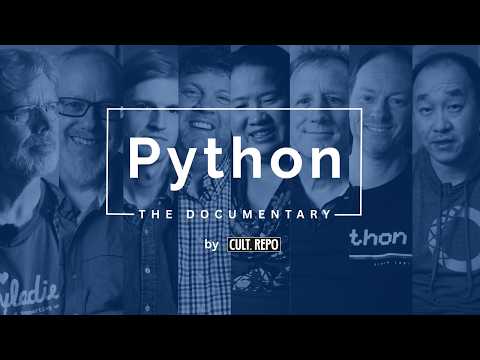
Python: The Documentary
The story of a language that bet on readability, package ecosystems, and experiment speed — and turned that bet into engineering leverage.
Source
Book Cube
Documentary review from Alexander Polomodov.
What is the film about?
The documentary follows Python from a research idea at CWI to one of the most influential languages in the industry. What holds it together is not syntax but community values — readability, simplicity, and engineering pragmatism — and those are what let the language outlive several generations of tooling.
From there the ecosystem hits a series of forks, each of which cost something: the rise of the scientific stack, the painful migration from Python 2 to Python 3, and the move from the BDFL model to collective governance, where responsibility for the language stopped resting on a single person.
For system design, this is above all a story about the language's role in the system. Python speeds up the team and connects services and data — but wherever a latency and throughput budget appears, the architecture has to draw the performance boundary upfront, or it ends up moving it under load.
Python is at its strongest as a language for readable code, fast orchestration, and a dense ecosystem. The advantage shows wherever product logic, automation, data work, and existing packages need to come together fast — without paying for it with a long ramp-up into a heavy stack.
Around the language grew the scientific stack, Jupyter notebooks, web frameworks, PyPI, and MLOps practices. That speed has a price: without dependency management, supply-chain checks, observability, and clear performance boundaries, it turns into fragility in production.
Python's maturity did not come for free either. The PEP process, Python Software Foundation, Steering Council, and the Python 2 to 3 lesson are accumulated process that made language evolution predictable for large products and libraries.
Python Architecture Map
Python is best read not as one universal answer, but as an ecosystem of roles: readable code, fast orchestration, data packages, web layers, and boundaries where acceleration and operational discipline matter.
Python connects readable code with fast product iteration
Python's strength is often not maximum execution speed, but how quickly teams can express business logic, connect packages, and identify performance boundaries.
Readability
Code is easy to read and discuss
Simple syntax lowers the cost of review, onboarding, and context transfer across teams.
Product
Business logic stays close to the problem
Teams validate ideas faster because less time is spent on language ceremony.
Glue
Orchestration connects systems
Python is useful for pipelines, automation, integrations, and stitching libraries together.
Ecosystem
Packages accelerate delivery
Mature libraries speed up the start, but require control over versions, licenses, and vulnerabilities.
Trade-off
Performance boundaries are explicit
Hot paths move to optimized services, native extensions, or specialized libraries.
Architecture meaning
What to design
- Which parts of the system benefit from readability and fast iteration.
- Where Python owns orchestration rather than heavy execution.
- How packages, versions, and performance boundaries will be controlled.
Why Python became mainstream
Low entry barrier and high readability
Getting into development is fast and the codebase stays understandable for broad teams — which means review and handing code between people cost less than in more closed stacks.
Strong connection to data and AI
NumPy, SciPy, Jupyter, PyTorch, and adjacent tools made Python one of the standard choices for data, ML, and applied AI scenarios.
Key technical ideas
Readability as an architectural multiplier
System cognitive load drops: code is easier to review, transfer between teams, and maintain over years. That lands directly on cost of ownership, not just on the author's comfort.
Python as an orchestration layer
In practice, Python often connects services, data pipelines, and high-performance libraries written in C, C++, or Rust.
Ecosystem as a strategic advantage
The scientific stack, web frameworks, and ready-made tools give product-start speed that is almost impossible to reproduce in isolation — a competitor pays for it with time it does not have.
Governance as part of reliability
Sustainable language evolution does not rest on the runtime alone: without mature community process, even strong technology decays the moment a key person leaves.
Key milestones
Python project begins
Guido van Rossum starts a new language at CWI as a practical tool for everyday development and automation.
First public release
Python appears on Usenet and quickly attracts an early community around readable, calm, expressive code.
Python 2.0
Important updates pull the language out of the scripting niche: a library ecosystem starts to grow around it, and Python settles in as an industrial tool.
Python Software Foundation is created
PSF creates long-term support for the language's open-source development model, conferences, and community.
Python 3.0 release
A large migration begins to improve long-term language quality and remove historical constraints.
Guido steps down as BDFL
After the PEP 572 discussion, the project moves toward a more distributed governance model and lowers bus factor.
Steering Council
Python formalizes council-based governance, improving transparency and stability in language evolution.
Python in data and AI
Python becomes one of the standard languages for research, MLOps, and applied AI products through a mature package ecosystem.
Python: The Documentary premieres
The film captures Python's engineering and cultural evolution from CWI to the era of industrial AI.
How the language evolves
PEP process as the backbone of evolution
Significant changes go through public Python Enhancement Proposals: motivation, alternatives, and consequences are on the table before the decision, not discovered afterward when changing anything is already expensive.
Steering Council after BDFL
The BDFL model worked while everything rested on one person. Collective governance removed that single point of failure and made decisions resilient to people changing.
PSF and ecosystem initiatives
Organizational support, conferences, education, and package infrastructure are the invisible work without which a language grows in fits and runs into burnout among a handful of maintainers.
Compatibility and migration discipline
The expensive Python 2 to 3 migration locked in caution toward breaking changes: deprecation windows and early warnings now read not as ceremony but as a way to avoid paying the same bill again.
People highlighted in the film
What matters for system design
Language choice depends on component role
Python fits orchestration and product logic well. The heaviest compute is cheaper to push into specialized layers — squeezing it out of pure Python means paying in latency and CPU bills.
Team speed is also an engineering metric
Across a long product lifecycle, change speed and onboarding usually outweigh a small gain in raw performance: a slow team is not something a fast runtime can buy back.
Migrations are inevitable in mature systems
The Python 2 to 3 story is a reminder that incompatible changes need planned migration windows and a clear version policy.
Dependency risk must be designed early
A rich ecosystem accelerates delivery, but it requires dependency policy, upgrades, and supply-chain checks.
How to apply Python ideas today
Common pitfalls
Recommendations
References
The factual base for this chapter is the film, python.org, PEP 20, PEP 13, PEP 572, and Python Software Foundation materials. The conclusions about Python's role in data and AI are editorial synthesis of the ecosystem context, not a quantitative language ranking.
Related chapters
- PyTorch: The Documentary - shows how the Python ecosystem became a base for applied deep learning and modern AI engineering.
- AI Engineering - extends the production view of systems where Python connects models, data, and product workflows.
- ML System Design - adds an architecture view of ML systems: pipelines, features, inference, monitoring, and operations.
- Node.js: The Documentary - gives a contrasting server-side path: Python as orchestration and data-process glue beside Node.js event-loop model.
- Elixir: The Documentary - helps compare reliability and concurrency strategies: Python's ecosystem with native acceleration and Elixir's BEAM/OTP model.