
Languages and platforms matter not on their own, but as a set of constraints that later show up in architecture. The same product will scale, operate, and age very differently depending on its runtime, ecosystem, and tooling quality.
The chapter helps connect language and platform choice to very concrete outcomes: delivery speed, concurrency model, hiring leverage, debugging quality, and operational risk. It quickly moves the discussion away from taste and back to engineering criteria.
For interviews and design reviews, it provides a clean frame: discuss the stack through workload shape, team structure, ecosystem maturity, and long-term maintenance cost rather than personal preference or fashion.
Practical value of this chapter
Design in practice
Map the role of languages and platforms in system architecture trade-offs to concrete architecture decisions: throughput, concurrency, observability, and change-cycle cost.
Decision quality
Judge platform choice by operational reliability, onboarding speed, and engineering process stability rather than hype.
Interview articulation
Present a causal chain: workload profile -> platform constraints -> architecture choice -> risks and mitigation plan.
Trade-off framing
Make trade-offs explicit around the role of languages and platforms in system architecture trade-offs: performance, DX, hiring risk, portability, and long-term maintainability.
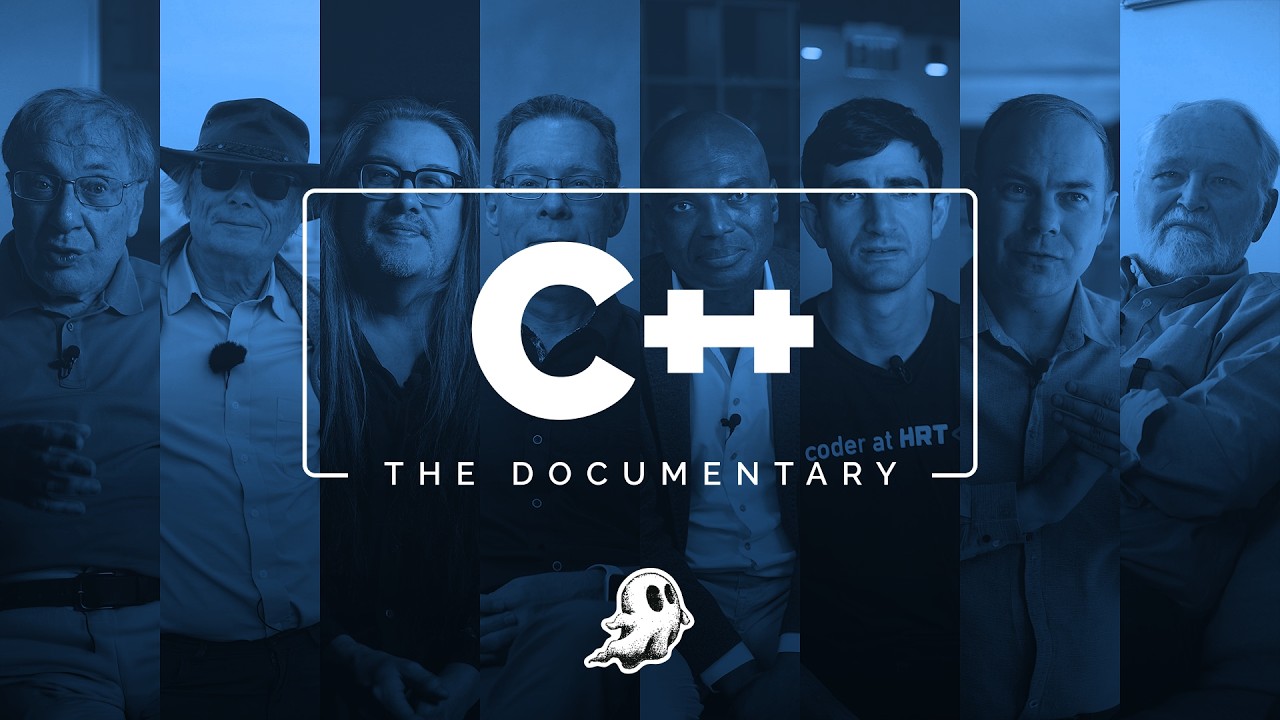
The Story of C++: The World's Most Consequential Programming Language
The official story of C++ as a language of systems trade-offs: performance, abstractions, standards, compilers, resources, and decades-long compatibility.
Source
The Story of C++: The World's Most Consequential Programming Language
CultRepo's film on C++ history, featuring the language creator, standards authors, and ecosystem engineers.
What is the film about?
The film tells the C++ story not as a list of syntax features, but as the path of a language that keeps holding the tension between low-level control and high-level abstraction. That is why C++ ended up in operating systems, browsers, games, compilers, financial systems, databases, and libraries for other languages.
For system design, the material is useful because it shows the real cost of language choice. In C++, the language, compiler, standard library, ABI, resource ownership model, and standardization process become parts of one architecture platform.
The useful reading is not “C++ is the fastest language”, but a more precise question: where does the system need control over memory, binary compatibility, latency, native-library delivery, and long-lived code?
C++ is a language where the runtime does not automatically own every concern. The team gets control over memory, object lifetime, layout, optimization, and binary boundaries; with that control comes engineering responsibility.
The architecture value of C++ appears when control is measurable: p99 latency, throughput, binary size, system API access, no garbage-collection pauses, or tight integration with hardware. In other cases, the gain should be compared honestly against long-term maintenance cost.
C++ Architecture Map
C++ is best read as a language of systems trade-offs: high-level abstractions, predictable native performance, explicit resource control, and a very long compatibility horizon.
An abstraction should disappear when it is not needed in machine code
C++ bets on expressive programming without charging for runtime facilities a program does not use.
Model
Code can express intent without an extra runtime layer
Classes, templates, and inlining add expressiveness, but the resulting cost still has to show up in profiles and generated code.
Contract
The type system constrains the abstraction
Types help capture ownership, interfaces, and valid operations before the program runs.
Build
The compiler specializes generic code
Templates and optimization move decisions into compilation and reduce work on the hot path.
Check
Profiling settles the cost debate
The C++ architecture promise must be validated with latency, throughput, and memory measurements.
Result
The native binary remains inspectable
The team keeps control over what reached the executable and where overhead entered the system.
Architecture meaning
What to design
- Where abstraction improves readability without hurting the hot path.
- Which invariants should move into types and compilation.
- Which metrics prove that zero-overhead is real rather than rhetorical.
Why C++ mattered
Systems abstractions without leaving the hardware behind
You can work through classes, templates, and libraries and still keep control over memory, binaries, and hot paths — control that abstractions almost always used to cost.
Performance became part of the language culture
In C++, discussions about latency, throughput, and memory use are rarely separate from API and component design.
A bridge across domains
Compilers, game engines, financial systems, browsers, databases, embedded systems, infrastructure libraries — the same language shows up everywhere, and the skill carries across domains with hard constraints.
Compatibility as an economic force
Backward compatibility protects decades of code, libraries, and skills, but it also makes language evolution slow and process-heavy.
Key technical ideas
Zero-overhead abstractions
The idea is not that C++ is free, but that unused features should not impose a runtime cost on every program.
RAII and resource ownership
A resource is tied to object lifetime: memory, files, connections, and locks are released on scope exit, not wherever someone remembered to do it. That removes a whole class of leaks before the program runs.
Static typing and compilation
The type system and compiler diagnostics move part of the defect feedback loop before the program starts.
ABI and binary boundaries
For C++ libraries, the application binary interface matters: the public contract includes not only source-level APIs but compiled-artifact compatibility.
Key milestones
C with Classes
Bjarne Stroustrup starts extending C at Bell Labs: the core idea is to combine C's efficiency with abstractions inspired by Simula.
The C++ name
The project receives the C++ name, and the language gradually moves from classes toward a broader set of systems abstractions.
The first book and the cfront era
The C++ Programming Language appears, while cfront helps carry the new language through C translation and the early compiler ecosystem.
C++98 and the standard library
The first ISO standard establishes a shared language for compilers, libraries, and teams; the STL becomes part of the common C++ vocabulary.
C++11 as language modernization
Move semantics, lambdas, auto, the threading library, and smart pointers change everyday C++ style without abandoning compatibility.
C++20 and C++23: a language for a large ecosystem
Concepts, ranges, coroutines, modules, and standard-library evolution show how the language continues to move while carrying a huge base of existing code.
The official C++ story premieres
CultRepo's film captures C++ as both a cultural and engineering platform: from Bell Labs to modern standards, compilers, and constrained domains.
How the ecosystem evolved
The committee as a long-term evolution mechanism
WG21 slows unilateral change, and that is the price of compatibility: compilers, libraries, learning material, and industrial codebases move along one path instead of splitting into dialects.
The standard library as a platform
Containers, algorithms, smart pointers, concurrency, ranges, and utilities form a portable layer that teams can build their style around.
The compiler and tooling became part of the language
Flags, sanitizers, static analysis, profilers, package managers, and CI matrices matter as much as syntax because C++ sits close to the platform.
C++ as the native core of other stacks
Native extensions and native acceleration let Python, Java, JavaScript, and other platforms push compute-heavy work into a C/C++/Rust layer.
Guests and key contributors
What matters for system design
C++ is often best as a component boundary
Instead of making the whole product C++, it is often enough to isolate an engine, library, storage core, or low-latency path behind a clear API.
The resource model must be architectural
Memory, threads, buffers, locks, and file descriptors need owners, lifetimes, and transfer rules.
Release engineering starts in the toolchain
The language standard, compilers, flags, linking, and binary compatibility belong in the architecture decision.
Long-lived systems require compatibility discipline
C++ shows that technical debt can live not only in code, but also in ABI, build systems, standards, and public libraries.
How to apply C++ ideas today
Common pitfalls
Recommendations
A short selection formula
References
The factual base for this chapter is the film itself, Herb Sutter's release note, Bjarne Stroustrup's history paper, and the official ISO C++/WG21 pages. cppreference below is reference navigation for language history, while the architecture takeaways about ABI, zero-overhead, and choosing C++ in system design are editorial assessment rather than an independent external source.
Related chapters
- Performance Engineering: performance as part of architecture - it turns the C++ discussion from language reputation into measurable latency, throughput, memory, and regression checks.
- CPU and GPU: how hardware affects architecture - it gives the foundation for understanding why C++ is often chosen when cache locality, SIMD, GPU buffers, and native code matter.
- RAM: from bits to NUMA - it complements resource ownership with memory fragmentation, allocators, and the real cost of data access.
- Operating systems: processes, threads, memory, and I/O - it shows the platform layer where C++ is often used for systems and infrastructure code.
- C# & TypeScript - History of languages with Anders Hejlsberg - it contrasts C++ evolution with managed platforms where runtime, IDEs, and compatibility work differently.
- Python: The Documentary - it shows the opposite layer: Python often stays the orchestration language while C/C++/Rust take compute-heavy work.