
Languages and platforms matter not on their own, but as a set of constraints that later show up in architecture. The same product will scale, operate, and age very differently depending on its runtime, ecosystem, and tooling quality.
The chapter helps connect language and platform choice to very concrete outcomes: delivery speed, concurrency model, hiring leverage, debugging quality, and operational risk. It quickly moves the discussion away from taste and back to engineering criteria.
For interviews and design reviews, it provides a clean frame: discuss the stack through workload shape, team structure, ecosystem maturity, and long-term maintenance cost rather than personal preference or fashion.
Practical value of this chapter
Design in practice
Map the role of languages and platforms in system architecture trade-offs to concrete architecture decisions: throughput, concurrency, observability, and change-cycle cost.
Decision quality
Judge platform choice by operational reliability, onboarding speed, and engineering process stability rather than hype.
Interview articulation
Present a causal chain: workload profile -> platform constraints -> architecture choice -> risks and mitigation plan.
Trade-off framing
Make trade-offs explicit around the role of languages and platforms in system architecture trade-offs: performance, DX, hiring risk, portability, and long-term maintainability.
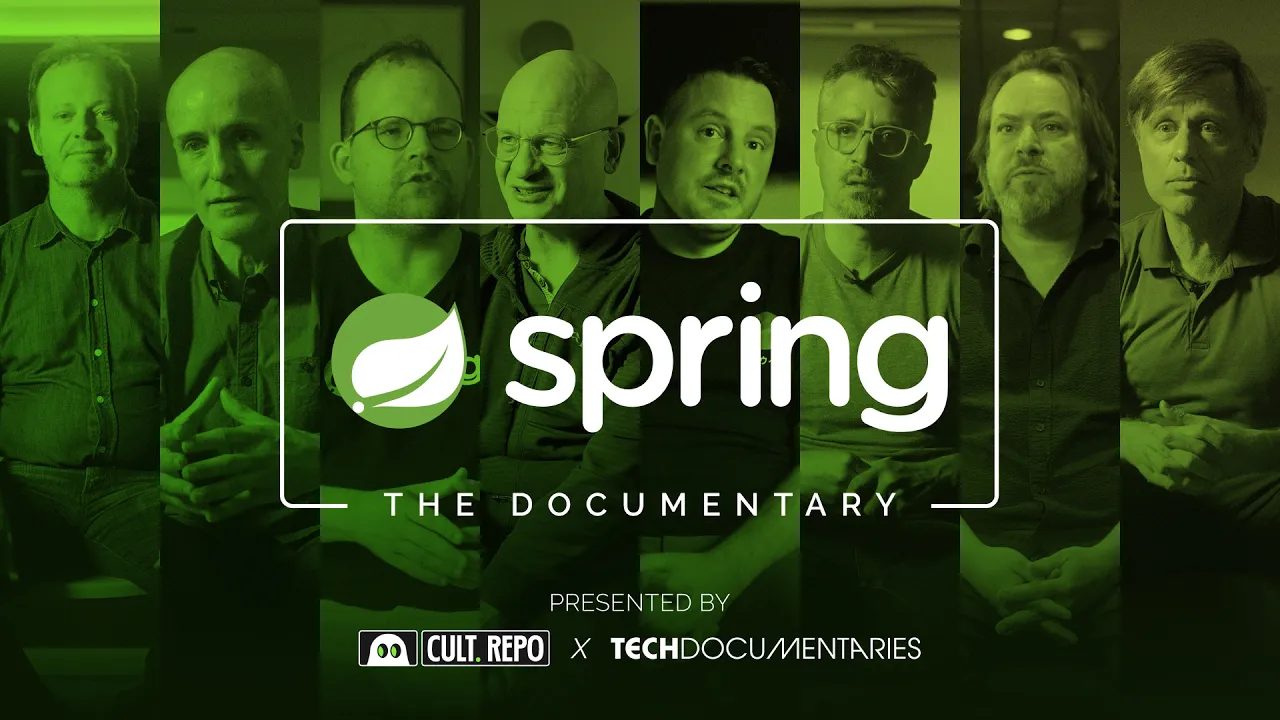
Spring: The Documentary
The story of developers growing tired of heavyweight Enterprise Java and reclaiming control over code through POJOs, dependency injection, testability, and later Spring Boot.
- Video
- How a Group of Developers Took Back Control from Enterprise Java
- A CultRepo documentary about Spring, Enterprise Java, and developers reclaiming control.
- Published
- May 7, 2026
- Public release of the film on YouTube.
- Duration
- 34:38
- A short historical film with interviews and a look at the modern Spring landscape.
- Focus
- J2EE -> Spring Framework -> Spring Boot -> legacy
- From heavyweight enterprise friction to testability, defaults, cloud-native work, and long-term support.
Review
book_cube note on the film
A concise framing: Spring as a story about developers reclaiming control, not only a popular Java framework.
The most interesting part of the film is not that Spring became a large framework. It is the birth moment: early 2000s Enterprise Java, application servers, XML descriptors, components, and the feeling that simple business logic required too much infrastructure ceremony.
Spring answered that with an engineering shift, not another large specification. Code could be ordinary Java again. Dependencies could be replaced. Objects could be tested separately. The container helped assemble the application, but did not need to own the entire architecture.
Historical line
Enterprise Java promises a serious platform
Java quickly became a corporate development language, while J2EE brought specifications, application servers, containers, and a component model. From the outside it looked mature; inside the team workflow it often increased the distance between business logic, tests, and a running application.
Rod Johnson states the critique of J2EE
Expert One-on-One J2EE Design and Development shipped with a working code base, not just arguments. The idea was simple and inconvenient for the industry: an enterprise application does not have to be heavyweight to be serious.
Code from the book becomes a community
The book examples attract active discussion, and Juergen Hoeller and other contributors help turn a set of engineering ideas into a living framework. This was a bottom-up path from real development pain, not another large specification from above.
Spring Framework 1.0 ships as a lightweight alternative
Spring brings dependency injection, dependency inversion, the POJO style, and testable object composition into mainstream Java development. The container remains useful, but it stops dictating the whole shape of the application.
Spring becomes a portfolio of projects
Transaction management, MVC, Security, Data, Integration, and other modules expand Spring beyond one container. Ecosystem power grows, but so does the cost of choosing, configuring, and upgrading the stack.
Spring Boot brings back the fast start
Boot gathers the modules into an application shape: starters, auto-configuration, an embedded server, and production-oriented defaults. That fit the age of microservices, containers, and cloud-native development extremely well.
A winning framework becomes infrastructure
Spring remains the base of a huge number of systems. That makes upgrades, CVEs, compatibility, end-of-life versions, and support for legacy applications part of the architecture story. Control does not end with choosing the framework; it has to continue in operations.
Control map: from application server to application
Spring is easiest to read as a shift in control: the container no longer hides business logic inside a heavyweight enterprise model; the application explicitly assembles dependencies, tests, and the runtime path.
Enterprise Java before Spring
The application server controls the model
Components, lifecycle, descriptors, and infrastructure rules were often set by the container before the team could express simple business logic.
Spring Framework
The IoC container assembles plain objects
POJOs stay ordinary Java code while dependencies are provided explicitly by the container. Infrastructure becomes application plumbing instead of the owner of the design.
Spring Boot
The application gets a default runtime
Auto-configuration, starters, and an embedded server turn Spring modules into a runnable application with clear packaging and production-oriented defaults.
The feedback loop Spring tried to shorten
The central win is not annotations by themselves, but a shorter path from change to verification and safe release.
Code
business logic as plain classes
Test
dependencies can be replaced
Package
starters and app packaging
Deploy
embedded server or platform
Observe
metrics, health, and signals
Upgrade
versions, CVEs, compatibility
Architecture meaning
- A container should help the application, not make business logic inseparable from infrastructure.
- Defaults are useful while the team still understands which decisions they made on its behalf.
- A winning technology becomes a platform: upgrades, security, and legacy need to be designed deliberately.
What matters architecturally
Business logic becomes plain code again
Spring's core move was not merely adding another container. It let important logic be written as ordinary Java objects without heavyweight component ceremony.
IoC and DI turn relationships into explicit design
When dependencies arrive from the outside, code is easier to read, replace, and test. Dependency injection made architectural boundaries more visible in everyday Java work.
Testability becomes an architecture requirement
Spring showed that unit tests should not require a full application server. If a class cannot be tested separately, that is a signal about the shape of its dependencies.
Boot shifts the problem from configuration to ownership
Spring Boot lowers startup cost, but the team still needs to understand defaults: which beans appeared automatically, which endpoints are exposed, how packaging works, and who owns runtime behavior.
Spring trade-offs
Developer control vs platform
Spring began as a way to pull applications out of a heavyweight enterprise container, but a successful ecosystem eventually becomes a platform with rules, versions, and a standard path.
Sensible defaults vs new magic
Auto-configuration speeds up the start while the team can still explain why a particular bean, filter, datasource, or actuator endpoint exists in the runtime.
Legacy support vs rewriting
In large organizations, safely maintaining old Spring applications is often more realistic than a big rewrite, especially when the business logic is stable and the risk sits in dependencies.
System design takeaways
Design around the feedback loop
Runtime and throughput get discussed almost every time; the path from change to verification gets forgotten. In system design it matters just as much: local run, tests, packaging, deploy, and observability decide how quickly the team fixes mistakes.
At scale, a framework becomes infrastructure
For a platform team, Spring is not just a library. It is a managed layer: service templates, dependency policy, security patches, guides, and an upgrade calendar.
Keep boundaries explicit even inside a convenient stack
DI does not save architecture automatically. Teams still need module boundaries, ownership, contract tests, and rules for where framework glue ends and the domain begins.
Count evolution cost up front
If a service is going to live for ten years, its design includes upgrades to Java, Spring, Boot, the container platform, observability, and security controls.
Common mistakes
Choosing Spring only because it is the corporate standard, without naming which product and team constraints it actually solves.
Treating auto-configuration as magic and not checking which components actually entered the runtime.
Writing integration tests for everything and losing Spring's early advantage: fast local checks for isolated logic.
Deferring framework upgrades until they become a security incident or a separate migration program.
How to watch the film usefully
For developers
Watch Spring as a dependency-design lesson: what should stay a plain object, what is infrastructure, and where the test boundary sits.
For tech leads
Check whether the team has a clear upgrade path: Java, Spring, Boot, dependencies, deprecated APIs, and security patches.
For interviews
Use Spring as an argument: architecture is judged not by a pretty runtime diagram, but by how quickly the team learns and releases changes.
References
The factual base for this chapter is the film itself, the official Spring/Spring Boot pages, release notes, and Martin Fowler's IoC/DI article. The Telegram review below is secondary commentary, while the architecture takeaways in the chapter are editorial assessment rather than an independent historical source.
- YouTube: Spring: The Documentary
- Telegram: book_cube review
- Spring Framework project page
- Spring Framework docs: IoC Container and Beans
- Spring Boot project page
- Spring Boot docs: Auto-configuration
- Spring Framework 1.0 Final Released
- Spring Boot 1.0 GA Released
- Martin Fowler: Inversion of Control Containers and the Dependency Injection pattern
Related chapters
- Why languages and platforms matter in System Design - helps evaluate Spring as a platform choice: runtime, ecosystem, team scale, and evolution cost.
- Ruby on Rails: The Documentary - offers a contrasting framework story that also changed daily development through defaults and conventions.
- Node.js: The Documentary - shows an alternative backend path: a different runtime, a different feedback loop, and a different journey from experiment to standard.
- Clojure: The Documentary - shows JVM pragmatism from another angle: a language that uses the mature Java platform while changing the code model.
- IntelliJ IDEA: The Documentary - adds the IDE context: why Spring, Java, and the JVM ecosystem depend so heavily on tooling and diagnostics.
- The Untold Story of Log4j and Log4Shell - is a reminder that a mature Java ecosystem needs upgrade discipline, supply-chain security, and CVE response.
- Clean Architecture (short summary) - provides a theoretical frame for dependency on details, dependency inversion, and domain boundaries.